Guide · Timeline · 6 min read
Wedding Music Timeline for a Mallorca Wedding
Most Mallorca weddings follow a similar arc: a late-afternoon ceremony in the light, sunset drinks, a long outdoor dinner and a party that has to respect the venue's rules. Here's how we plan the music across that day — and where couples usually get it wrong.
By SOULBEATFUL ·
16:00–17:00 — Ceremony
The most emotional twenty minutes of the day, and the ones with the least tolerance for a technical mistake. Live is the way to go: a wedding singer with acoustic guitar or piano, or a duo. You need four pieces of music — guests arriving, the walk-in, the signing, the walk-out — and a singer who watches the celebrant, not a clock. Choose songs that mean something to you; skip the ones that are only there because they're famous.
Sound: battery-powered, discreet amplification so the vows are heard in the last row and no speaker is standing next to the flowers. On Mallorca, expect wind at coastal venues; a good musician knows how to position for it.
Wedding singer for ceremonies17:00–19:00 — Cocktail hour and sunset
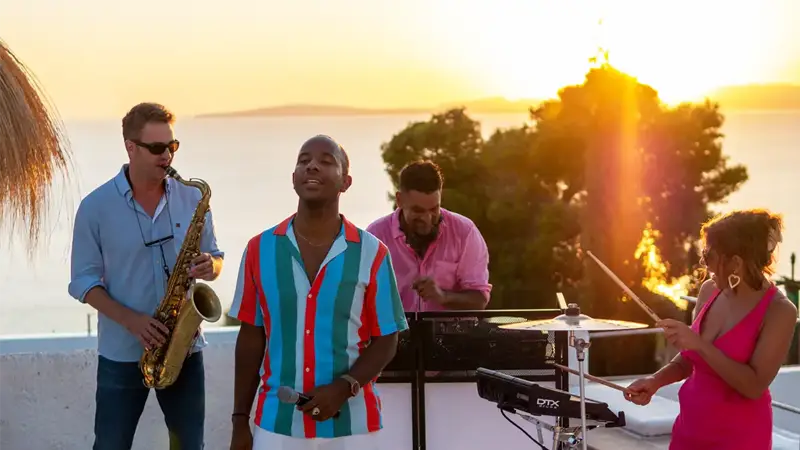
The photos happen now, so the music's job is atmosphere, not attention. Two options work beautifully in the Mallorca light: an acoustic trio (voice, guitar, percussion) with bossa nova, soul and lounge standards, or DJ + saxophone with deep house and disco edits at conversation level. The second has become the signature sunset sound of the island.
Mistake to avoid: playing the party music now. Save it. The cocktail hour should leave guests wanting more, not tired.
19:30–22:00 — Dinner and speeches
Long Mediterranean dinners need music that follows the courses: warmer and slightly more present between them, almost invisible during them. A singer with piano, or curated lounge sets, both work. The technical essential is wireless microphones for the speeches — and a sound engineer who has the level right before the first speaker stands up.
Plan the first dance for the end of dinner, not the start of the party: it's the bridge between the two, and it means the band opens the floor with the room already on its feet.
22:00–00:00 — The party
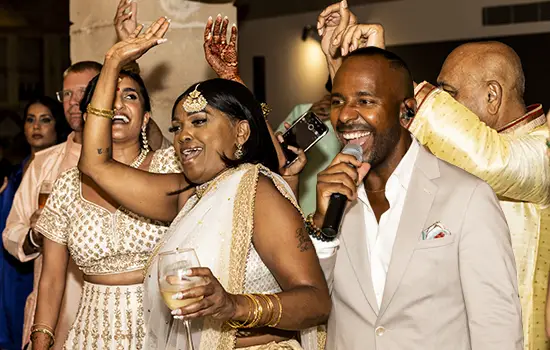
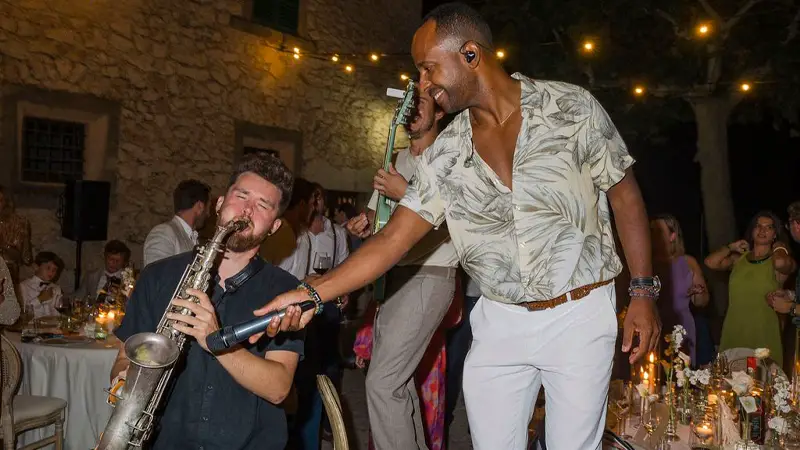
This is where the venue matters. Many open-air venues on Mallorca limit amplified music around midnight; some earlier, some later. Build the peak of the night before that time, not after it. In practice: the band or DJ & live combo opens straight after the first dance, plays the strongest ninety minutes to two hours of the night, and hands over to the DJ for the last stretch.
Open-format is the rule for Mallorca guest lists: pop and soul classics, current hits, Latin, disco and house, a nod to each nationality on the floor. Give your musicians a must-play list of 15–30 songs and a short do-not-play list; the rest they read from the floor.
Wedding DJ and the DJ & Live Combo00:00 onwards — After-party
If the outdoor music has to stop, the party doesn't have to. Options we see most: continuing indoors with the DJ where the venue allows, moving to a second location (a villa, a beach club, a bar in Palma), or a silent-disco set-up where the venue prefers it. Plan this in advance with the venue and your planner — it's not something to decide at 23:55.
Read: music curfews and noise rules at Mallorca venuesOne team for the whole day
The single biggest simplification we can recommend: book the ceremony singer, the cocktail musicians, the band and the DJ as one team. One quote, one sound system, one contact for your planner, and musicians who know each other's cues. The day flows — and the handover moments that usually go quiet simply disappear.
Check availability for your date